CBSE Makes Third Language Mandatory from Class 6: What Schools Must Do Now. The Central Board of Secondary Education has announced an important update that will impact Schools, Students, and Parents across the Country.
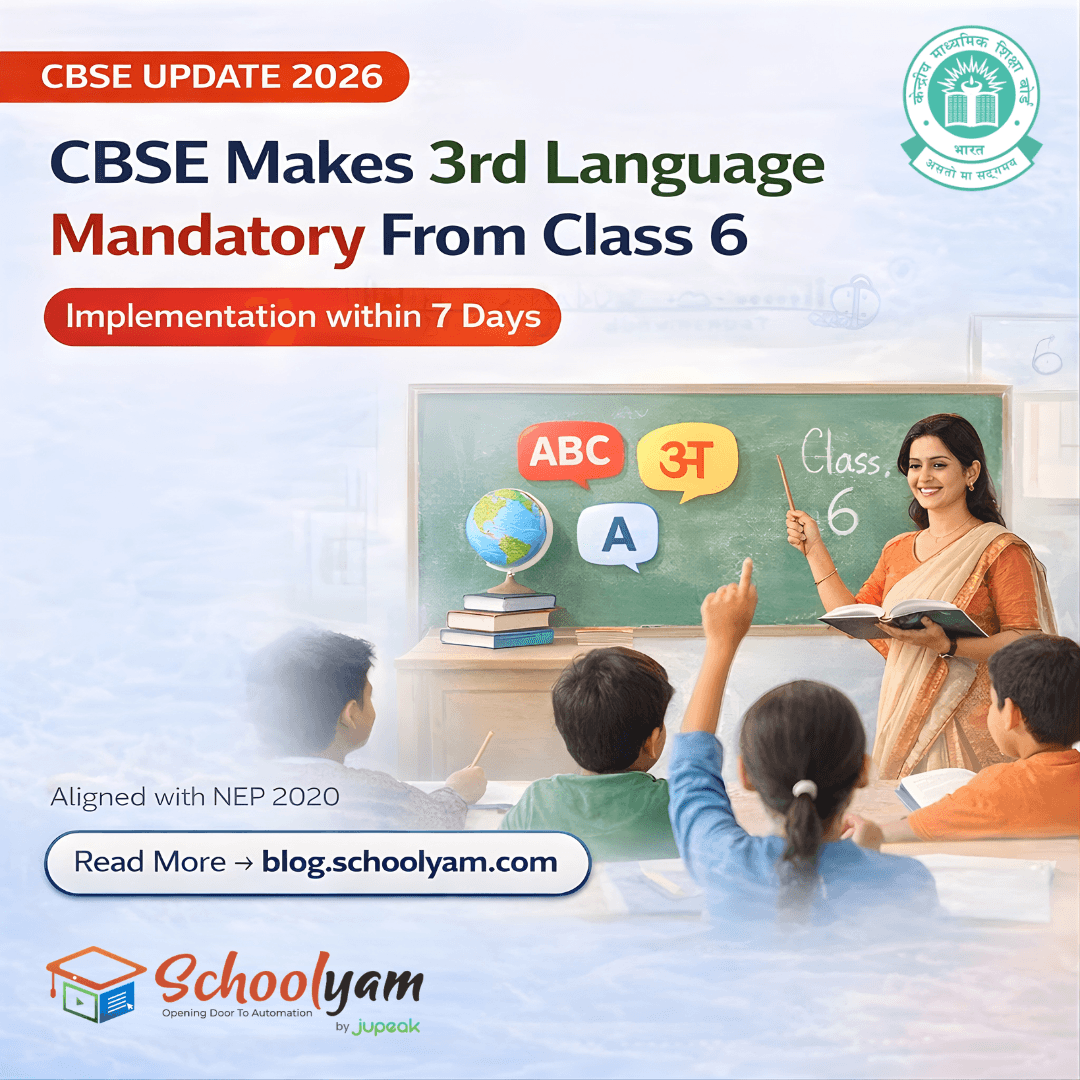
As per a Circular issued on April 9, CBSE has made it Compulsory for all Affiliated Schools to introduce a Third Language (R3) starting from Class 6 from the Academic Session 2026–27.
What makes this update more urgent is that Schools have been instructed to begin Implementation within Seven Days.
While some Schools have already started preparing, others must act quickly to stay compliant.
Let’s understand what this change means and what Schools should do next.
What does this mean for Students?
Under this new rule, Students will now study Three Languages instead of two from Class 6 onwards.
These languages will be divided into the following categories:
- R1: Regional language or Mother Tongue
- R2: Common language such as Hindi or English
- R3: One Additional Language (Indian or foreign)
Students will be required to continue studying All Three Languages up to Class 10.
This change aims to Improve Communication Skills, promote Multilingual Learning, and help students understand different Cultures and Languages.
However, it may also bring Additional Academic Workload for Students, especially during the transition phase.
Schools Directed to Begin Immediately
CBSE has clearly instructed Schools to start teaching the Third Language immediately, even if official textbooks are not yet available.
Until the Official Books are released, Schools are allowed to:
- Use Locally Available Books
- Refer to Alternative Learning materials
- Begin basic Teaching and Familiarization
The board has also mentioned that many schools have already started implementing this change, and All Remaining Schools must ensure compliance within the given timeline.
This means School Management teams should act quickly to Plan Teacher Allocation, Subject Selection, and Scheduling.
Aligned with National Education Policy 2020
This major update is aligned with the vision of the National Education Policy 2020, which strongly promotes multilingual education among students.
The goal is to help students become more adaptable, culturally aware, and linguistically skilled, preparing them for future academic and professional opportunities.
What Schools Should Do Next
With the limited timeline provided by CBSE, Schools should focus on:
- Selecting the third language (R3) suitable for their region
- Assigning Teachers or arranging training if needed
- Updating Class Schedules to include the new subject
- Informing Parents about the new rule and its benefits
Early planning will help schools implement the change Smoothly without confusion.
Conclusion
CBSE Makes Third Language Mandatory from Class 6: What Schools Must Do Now. This new CBSE rule marks a significant shift in School Education.
While the introduction of a third language may seem challenging at first, it is designed to Strengthen Students’ Communication abilities and broaden their learning horizons.
For Schools, the key to handling this update successfully lies in Quick Planning and Clear Execution.
The sooner Schools begin preparing, the smoother the transition will be for Teachers, Students, and Parents alike.
Stay Updated with the Latest CBSE News!
If you want to stay informed about important CBSE Circulars, Policy Updates, and School Guidelines, make sure to follow us Schoolyam–
Instagram, Facebook, LinkedIn.
CBSE Makes Third Language Mandatory from Class 6: What Schools Must Do Now.